
Free knowledge to monitor the world of events. Have a look at our must read Blogs on Pharma, Finance, HR, Health and Cross Industry.
Chemically synthesized APIs form the backbone of modern pharmaceuticals
2022-08-16
APIs keep the pharmaceutical industry updated about quality, safety, and drug efficacy
In modern times, APIs keep the pharmaceutical industry updated with regards to quality, safety, and drug efficacy. While there exist two main types, namely, biologically derived and chemically synthesized, the latter remains the most highly utilized owing to their precision and capabilities for desired scaling. This article aims to describe what APIs of chemical origin are, how they are synthesized, and why they remain indispensable in today's medical world.
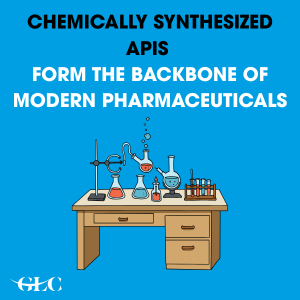
What are Chemically Synthesized APIs?
While chemically synthesized APIs are active ingredients produced through controlled chemical reactions, either at a laboratory or manufacturing level, biological APIs rely on living cells for their production. On the other hand, chemically synthesized APIs depend upon organic and inorganic chemical processes to produce molecules with therapeutic effects.
These APIs can be found most in:
- Painkillers
- Antibiotics
- Antihypertensives
- Antidiabetic drugs
- Antitumor drugs
Another reason is that their structure is predictable, thus reproducibility for large-scale production is highly attainable with them.
How Chemically Synthesized APIs Are Produced
Production of chemically synthesized APIs entails a multi-step process with strict controls in place:
- Research and Molecular Design
The target molecule is designed and studied by the chemists to approximately produce the desired therapeutic action and stability.
- Stages of Chemical Reaction
Multiple chemical reactions are done one after another to get the final molecule: these may include:
- Oxydation / reduction
- Condensation
- Substitution
- Stereochemical transformations
Each step is optimized for high purity and yield.
- Purification and Isolation
Advanced methods of purification include crystallization, filtration, or chromatography, which are done in such a way that impurities are reduced to very low levels to meet the strict regulatory standards.
- Testing the Quality
Every batch is put through tough testing to guarantee that:
- Correct molecular structure
- High purity
- Potency
- Safety and stability
The quality control activities had been performed as per guidelines laid down by the international regulatory body such as FDA, EMA, ICH, and WHO.
Advantages of Chemically Synthesized APIs
- High Consistency
Precise and repeatable processes provide API chemical synthesis with consistent batch-to-batch quality, crucial for patient safety.
- Production at Low Cost
Chemical synthesis is generally more cost-effective than biological production, particularly for small-molecule drugs.
- Scalability
Producers can easily scale up production, meeting demand on the global market without compromising on the quality.
- Strong Stability
the shelf life of APIs is usually longer and the temperature stability better, which makes storage, transport, and distribution easier.
Real-World Use Cases in the Pharmaceutical Industry
Chemically synthesized active pharmaceutical ingredients are the basis of most drugs, including:
- Cardiovascular drugs: for hypertension and heart disease
- Analgesics: for pain management
- Antibiotics: for bacterial infections
- Oncology medications: targeted small-molecule cancer therapies
- CNS drugs: for neurological and psychiatric conditions
Their reliability is important in ensuring safe treatment for millions of patients worldwide.
Regulatory Expectations
Due to their importance, chemically synthesized APIs must comply with global good manufacturing practices (GMP), including:
- Strict documentation
- Traceability of raw materials
- Controlled manufacturing environments
- Continued process verification
These measures ensure that every API meets the highest safety and efficacy standards.
The Future of Chemically Synthesized APIs
Despite the rise of biologics, chemically synthesized APIs will continue to dominate the pharmaceutical landscape. Innovations such as:
- Green chemistry
- Continuous manufacturing
- AI-assisted drug design
- Flow chemistry
are transforming the way APIs are developed, making them safer, cleaner, and more efficient.
Conclusion
Chemical synthesis of APIs is a major backbone of pharmaceutical technology and provides unparalleled cost-effectiveness and scalability. With advancing technology in the future, the pharmaceutical sector will further improve and develop this synthesis technique, ensuring excellent drugs for all patients across different parts of the world.
Invest in advanced API solutions if your organization is seeking expertise in chemical API production, regulatory compliance, or quality management. Great Lakes can help your organization with this investment.
A complete Masterclass on Chemically Synthetized APIs is out right now!
By Shara Najimudeen, Digital Marketing Executive, GLC Europe, Colombo Office, Sri Lanka.

Get a feel for our events

Training Program for CMC Leaders - EU edition
14th September 2026 - 09th April 2027
Rich with practical insights and real-world applications
learn more >>
Training Program for CMC Leaders - US edition
14th September 2026 - 09th April 2027
Rich with practical insights and real-world applications
learn more >>
Impurities Training Course - EU edition
15 September - 26 November, 2026
Impurities: from A to Z
learn more >>