
Free knowledge to monitor the world of events. Have a look at our must read Blogs on Pharma, Finance, HR, Health and Cross Industry.
Reverse Engineering & Solid-State Intelligence in Generic Drug Development
2022-08-16
The 2 major scientific foundations that make the feasible
In the cutthroat market of generic drugs, the key to success lies in speed, accuracy, government regulations, and scientific expertise. Once a patented drug goes off-patent, several firms start working on the development of a generic equivalent. Two major scientific foundations make this feasible: reverse engineering and solid-state intelligence.
These two concepts are the foundation of generic drug development.
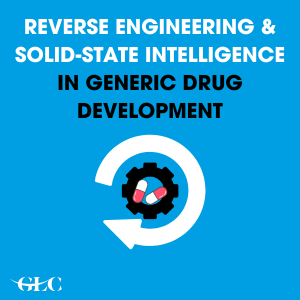
What is Reverse Engineering in Generic Drug Development?
Reverse engineering in the pharmaceutical industry is the process of examining a reference-listed drug (RLD) to comprehend its:
- Active Pharmaceutical Ingredient (API)
- Excipients and formulation
- Manufacturing procedure
- Release mechanism
- Stability profile
- Physical and chemical attributes
For instance, if a firm wishes to develop a generic form of a highly successful drug such as Lipitor (atorvastatin), scientists must thoroughly examine the innovator drug to develop a generic equivalent that does not violate active patents.
Why Reverse Engineering Matters
Generic manufacturers must prove bioequivalence to the reference drug. That means:
- Same dosage form
- Same strength
- Same route of administration
- Comparable pharmacokinetic profile
Reverse engineering reduces development risk, shortens timelines, and ensures regulatory readiness.
Key Steps in Pharmaceutical Reverse Engineering
- API Characterization
- Polymorphic form identification
- Particle size distribution
- Crystallinity
- Impurity profiling
- Excipients Identification
- Qualitative (Q1) analysis What excipients are used?
- Quantitative (Q2) analysis How much of each excipient?
- Functional role understanding (binder, disintegrant, lubricant, etc.)
- Formulation Mapping
Scientists evaluate:
- Dissolution profile
- Hardness
- Friability
- Disintegration time
- Process Hypothesis
Scientists hypothesize, based on physical evidence:
- Granulation process (wet/dry/direct compression)
- Coating process
- Compression force parameters
Reverse engineering is both science and strategic intelligence.
What is Solid-State Intelligence?
Solid-state intelligence is the understanding of the physical state of the drug substance and product, especially its crystalline and amorphous properties.
The solid state of a drug affects:
- Solubility
- Dissolution rate
- Stability
- Bioavailability
- Manufacturability
A change in solid state can cause a complete change in product performance.
The Role of Polymorphism
Many drug compounds exist in more than one crystalline form, known as polymorphs. Each polymorph has a different:
- Melting point
- Stability
- Solubility
- Mechanical properties
A famous example is Norvir (ritonavir), where a new, more stable polymorph unexpectedly formed during manufacturing, causing a drastic change in solubility.
This incident changed the way the pharmaceutical industry thinks about solid-state screening and risk analysis.
Solid-State Characterization Methods
To create solid-state intelligence, scientists employ:
- X-ray Powder Diffraction (XRPD)
- Differential Scanning Calorimetry (DSC)
- Thermogravimetric Analysis (TGA)
- Solid-State NMR
- Raman Spectroscopy
- Scanning Electron Microscopy (SEM)
These methods enable the evaluation of:
- Polymorphic form
- Hydrates and solvates
- Amorphous content
- Crystal habit
How Reverse Engineering & Solid-State Intelligence Work Together
Reverse engineering reveals what the reference product contains.
Solid-state intelligence reveals how it performs.
Together, they enable developers to:
- Choose the correct polymorph
- Align dissolution profiles
- Avoid patent infringement
- Develop robust manufacturing processes
- Minimize stability failures
Without solid-state intelligence, a formulation may initially succeed but ultimately fail stability or large-scale manufacturing.
Without reverse engineering, developers may incorrectly assess key quality attributes (CQAs).
Regulatory Requirements
Regulatory bodies such as the U.S. Food and Drug Administration (FDA) and the European Medicines Agency (EMA) require:
- Comprehensive polymorph management strategies
- Solid-state risk analysis
- Impurity and degradation analysis
- Stability studies under ICH guidelines
- QbD (Quality by Design) rationale
Failure to grasp solid-state risks may result in:
- Out-of-specification product
- ANDA approval failures
- Warning letters
- Product recalls
Competitive Advantage in the Generic Market
In todays world:
- First-to-file advantage is important
- Patent disputes are frequent
- Litigation risk is high
- Schedules are shorter
Investing early in:
- Advanced analytical platforms
- Solid-state screening
- Full reverse engineering expertise
Provides a huge competitive advantage
They minimize reformulation times, avoid expensive scale-up failures, and facilitate smoother regulatory approval.
Future Trends
The future of generic drug development is becoming more data-intensive:
- AI-enabled reverse engineering
- Predictive solid-state modeling
- Integrating material science
- Compatible continuous manufacturing
- Improved intellectual property analytics
Solid-state intelligence is no longer focused on reactive troubleshooting. It is moving towards proactive design science.
Conclusion
Reverse engineering and solid-state intelligence are not just technical tools they are strategic enablers in generic drug development. Reverse engineering decodes the reference product, while solid-state intelligence ensures stability, performance, and manufacturability. Together, they transform uncertainty into scientific control and scientific control into commercial success. In a world where generic competition defines affordability and access to medicines, mastering these disciplines is no longer optional; it is essential.
A complete Masterclass on Reverse Engineering & Solid-State Intelligence in Generic Drug Development is out right now!
By Shara Najimudeen, Digital Marketing Executive, GLC Europe, Colombo Office, Sri Lanka.

Get a feel for our events
Training Program for CMC Leaders - EU edition
14th September 2026 - 09th April 2027
Rich with practical insights and real-world applications
learn more >>
Training Program for CMC Leaders - US edition
14th September 2026 - 09th April 2027
Rich with practical insights and real-world applications
learn more >>
Impurities Training Course - EU edition
15 September - 26 November, 2026
Impurities: from A to Z
learn more >>